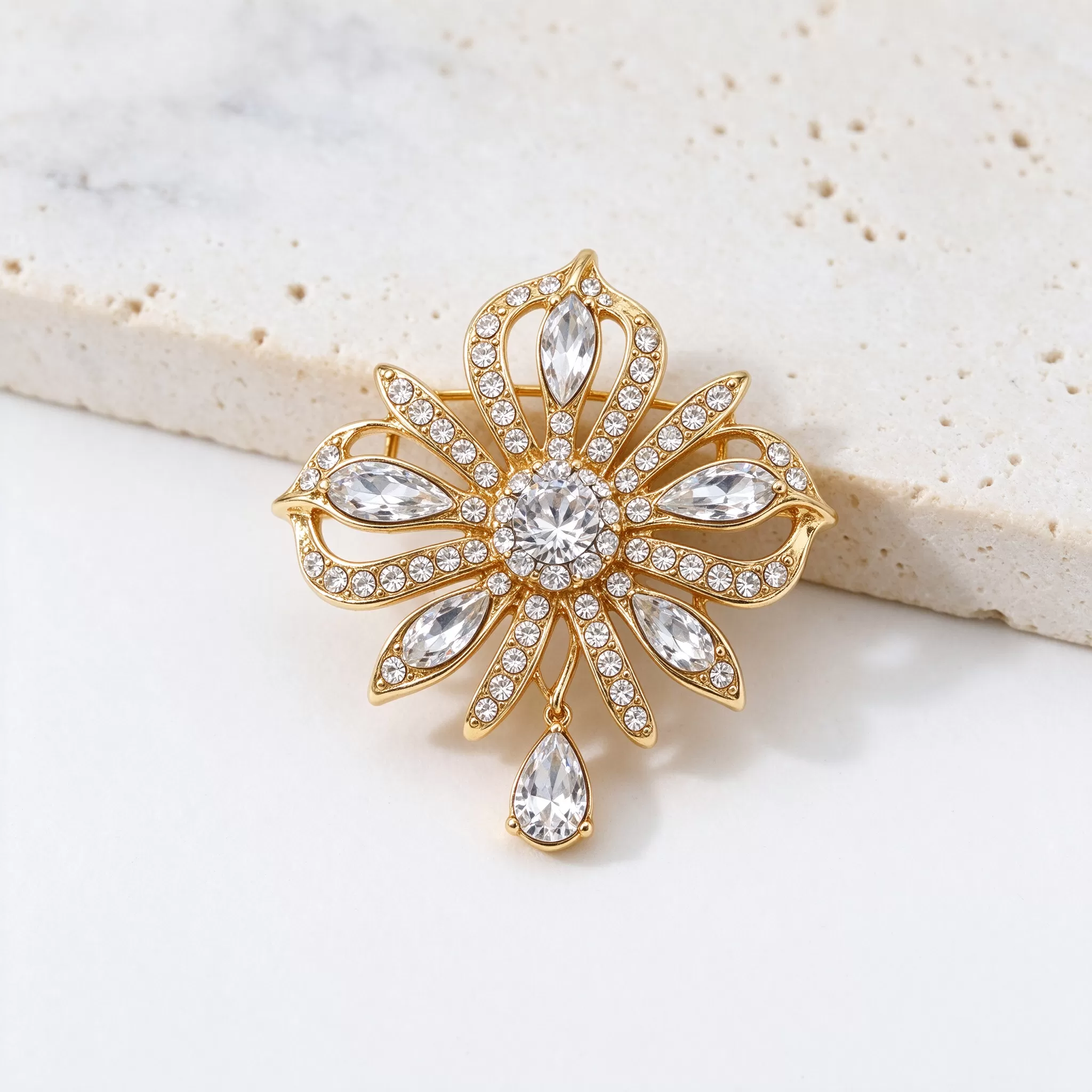
Gift buyers do not want to browse a tray of loose pins. They want a small box that looks like a present the moment it leaves the counter. That is why scarf rings, kerchief slides and boxed brooch gift lines are one of the most profitable segments of the brooch category. A gift-ready brooch line turns an impulse accessory into a wrapped present, and the customer pays more because the presentation is already done for them. This guide covers what to stock, how to package it, which seasons matter, and how factories price gift sets.
The logic is simple but powerful. A customer buying for a birthday, a thank-you or a holiday is not comparing gram weights. She is comparing which product looks most like a finished present. The retailer who provides the box, the insert and the coherent theme wins that sale every time, and the margin follows. The cost of a box is cents; the willingness to pay for a gift-ready product is dollars.

Scarf rings and slides: the forgotten accessory
A scarf ring or slide is a small metal finding that holds a silk scarf or kerchief neatly at the neck. It is technically not a brooch, but customers shop them together and they live on the same display. For a reseller, scarf rings are attractive because they are cheap to buy, small to ship, and almost never returned. Customers do not need to know how to use them if your listing shows a quick styling diagram.
The most useful formats are the simple open ring, the slide bar, and the hinged scarf buckle. A ring works with a thin silk square; a buckle works with a slightly thicker scarf. Stock a mix so the customer who already owns scarves can find a finding that fits. Cross-merchandise scarf rings with silk scarves if you carry fabric, and with brooches if you do not. Either way, the scarf ring is the cheapest add-on in the whole jewelry case.
- Open rings: best for thin silk squares.
- Slide bars: clean, modern, good for minimalist customers.
- Hinged buckles: hold thicker scarves securely.
- Stone-set and enamel rings: dress up a plain scarf for evening.
Why boxed brooch gifts outperform loose pins
Three reasons. First, perceived value jumps the moment a pin goes into a box. The same brooch that sells loose for $14 can sell boxed for $24 because the customer sees a present, not an accessory. Second, gifting seasons become predictable. November and December, Mother's Day, Valentine's Day and graduation week drive a large share of brooch sales, and a boxed product is ready for those moments. Third, returns drop because the buyer has a clear use in mind: they are buying a gift, not experimenting.
Factories can supply simple paper boxes, velvet pouches or acetate lids at very low cost. A plain two-piece paper box with a foam insert adds around $0.30 to $0.60 per unit. A velvet pouch adds $0.20 to $0.40. Either one justifies a retail price increase that is several times the cost. The packaging is not an expense; it is the feature that lets you raise the price without changing the product.
Designing a brooch gift line that sells
A gift line should be coherent, not random. Pick a theme and build around it. Three themes work particularly well, and you can rotate them across the year.
The classic lapel edit
Three neutral brooches in gold or rhodium: a small floral, a bar pin and an animal accent. Packed in a single box, this suits corporate gifting and professional women. It is your safest, most repeatable gift set because it works for almost any recipient. Keep this one in stock year-round.
The seasonal floral box
Two to three enamel florals in a season's colors: pastels for spring, deep berry tones for autumn. This sells through Mother's Day and holiday gifting and pairs naturally with scarf rings. Rotate the colors each season so repeat buyers see something new.
The scarf-and-pin pairing
One scarf ring plus one matching brooch in a box. This is the easiest upsell because it gives the customer two ways to wear one look. You do not need to supply the scarf; the customer owns one already. This set has the highest perceived value per dollar of cost.
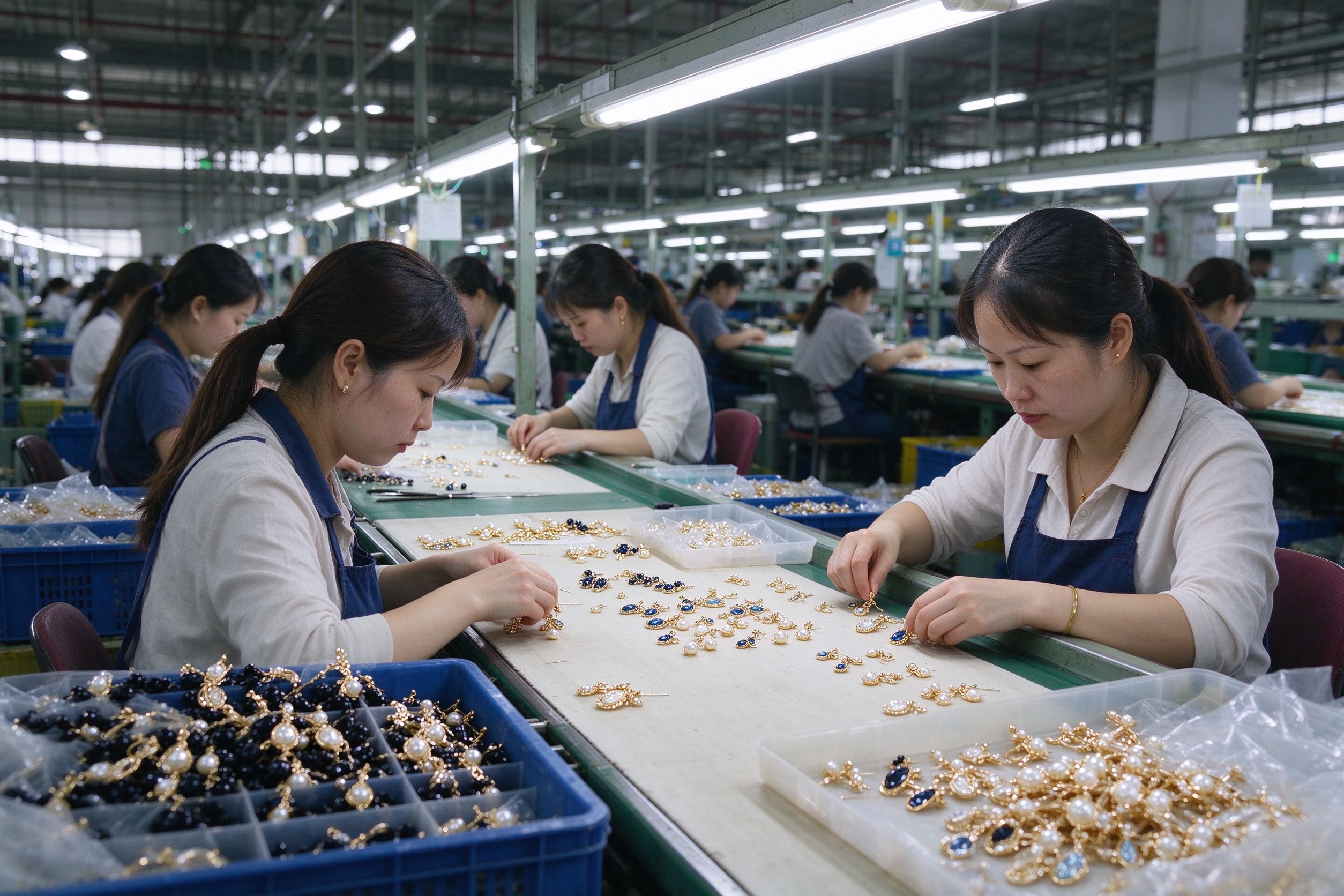
Pricing gift sets for maximum margin
The math on gift sets is favorable. Suppose a brooch costs you $1.20, a scarf ring costs $0.80, and a box with insert costs $0.50. Total landed cost is around $2.50. Retail the set at $24 to $32 and you hold a healthy margin while the customer still feels she is getting a curated deal. Compare that to selling the same two pieces loose at $12 and $8, where the customer dithers and the average order value stays low.
Price the set against the sum of its parts. If the loose pieces would total $20 separately, price the boxed set at $26. The small premium pays for the box and the convenience, and the customer perceives a gift rather than a bundle. Never discount gift sets during a sale; they are already positioned as presents, and discounting them erodes the premium.
- Keep total landed cost under 15 percent of retail.
- Offer one entry set and one premium set per theme.
- Use the box to justify the price, not to hide a weak product.
- Leave room for a handwritten gift card at checkout.
- Compare the set price to the sum of loose prices on the packaging.
Seasonal planning for gift brooches
Gift buying is calendar-driven, and your factory orders should be too. Place gift-set production in time to arrive six to eight weeks before each peak. For holiday gifting, have stock on hand by mid-October. For Mother's Day, by late March. For Valentine's Day, by early January. Factories slow down around Chinese New Year, so any order that needs to land in February or March should be confirmed well before the holiday shutdown.
Plan two gift themes per year rather than chasing every minor holiday. A winter holiday edit and a spring floral edit cover the bulk of gifting demand without spreading your cash too thin. Trying to launch a new theme for every small occasion spreads your inventory across too many SKUs and leaves you with dead stock after each event.
Within each theme, hold a small "evergreen" core that never changes: one neutral lapel box, one classic floral, one scarf-and-pin pairing. These sell all year and carry the line between seasonal drops. The seasonal pieces create freshness; the evergreen pieces carry the baseline revenue. Resellers who have only seasonal gifts panic after each holiday because everything must move at once; resellers with an evergreen core have steady sales every month.
Corporate and bulk gifting opportunities
One segment many small resellers overlook is corporate gifting. Companies buy brooch gift sets for staff recognition, conference swag and executive thank-you gifts. This is where private-label backing cards and boxes with a company logo pay off. Minimums for corporate orders are usually 100 to 300 sets, and the reorder rate is high once a company adopts your design. Even as a small buyer, you can position yourself to handle these orders by offering branded boxes and reliable lead times.
Corporate clients value consistency more than novelty. They want the same pin delivered the same way every quarter. That predictability is a gift to your production planning: you can forecast the corporate line months ahead and avoid the wild swings of consumer fashion. Treat corporate buyers as a separate, steady revenue stream.
Always open a gift line with a sample box of your own. Order one of each set you plan to sell, assemble it exactly as the customer will receive it, and live with it for a week. Does the box feel good in the hand? Does the pin sit straight? Does the insert protect it? You will catch small problems that never show up in photos, and you will have a physical sample to show retailers or corporate prospects. The cost of one sample box is trivial compared with the embarrassment of shipping a flawed first batch.

QC for gift sets: the box matters as much as the pin
When you buy gift sets, quality control is not only about the jewelry. The box must hold up. Run these checks on samples. A beautiful brooch in a crushed or flimsy box reads as cheap. The packaging is part of the product, and it deserves the same inspection as the metal.
- Box closes cleanly and does not spring open on the shelf.
- Insert holds the brooch firmly so it does not rattle in transit.
- Printing on the box is aligned, with no smudged foil.
- Brooch back finding is covered so it does not scratch the box lining.
- Box survives a short drop without crushing.
- Inner sleeve fits snugly and does not slide around.
Shipping gift sets without crushing
Even a good box can arrive damaged if it ships loose in a carton. Ask the factory to pack gift sets in fitted dividers so each box sits in its own compartment. For air-freighted sample orders, a crushed box is not just a cosmetic problem; it means your first photo shoot and first customer order are compromised. Budget for proper outer cartons rather than skimping on corrugation. The few dollars per carton protect a product you have already invested in.
Add-ons that raise the gift basket value
Once a customer has decided to buy a gift, small add-ons lift the order with very little resistance. A handwritten gift card costs you almost nothing and removes one more errand from the buyer. A velvet pouch inside the box protects the piece and adds a sense of ceremony. A care card explaining how to keep the plating bright makes the gift feel considered. None of these add-ons is expensive, but together they justify rounding the sale up from $26 to $35.
The most effective add-on is a second small pin. A gift set with one brooch is a present; a gift set with three small pins feels like a curated collection. Offer the second and third pin at a small bundle discount rather than full price, so the customer feels she is getting a deal while your average order climbs. The bundle also uses up the small accents that are otherwise hardest to sell individually.
Measuring whether your gift line is working
Track a few simple numbers each season and you will know whether the gift line is pulling its weight. Watch the sell-through rate: the percentage of gift sets sold within six weeks of arrival. A healthy gift set sells out before the next season begins. Watch the average order value on transactions that include a gift set; it should be meaningfully higher than transactions that do not. And watch the reorder rate from corporate clients, because a recurring corporate account is worth more than a hundred one-off retail buyers.
If a gift theme does not sell through, do not repeat it next year. The hardest habit to build is retiring a theme that looked promising but did not move. Treat each seasonal edit as an experiment: two themes per year, measured honestly, and the winners get reworked rather than retired. Over two or three years that process leaves you with a small, reliable gift catalog that you can forecast with confidence.
Turning pins into presents
Loose brooches are accessories; boxed brooches are gifts. The difference in customer perception and margin is large, and the extra cost of a box is small. Build one or two gift themes per year, pair a scarf ring with a matching pin, and time your factory orders to land before each gifting peak. Treat the packaging as part of the product and inspect it as carefully as the jewelry. Done well, a small brooch gift line becomes the part of your catalog that customers return to for every birthday, holiday and thank-you moment, and it turns a low-value accessory into a high-value recurring revenue stream.
